Dariusz Wójcik
Solar System Physics and Astrophysics Division
Space Research Centre PAS
Bartycka 18a, 00-716 Warsaw
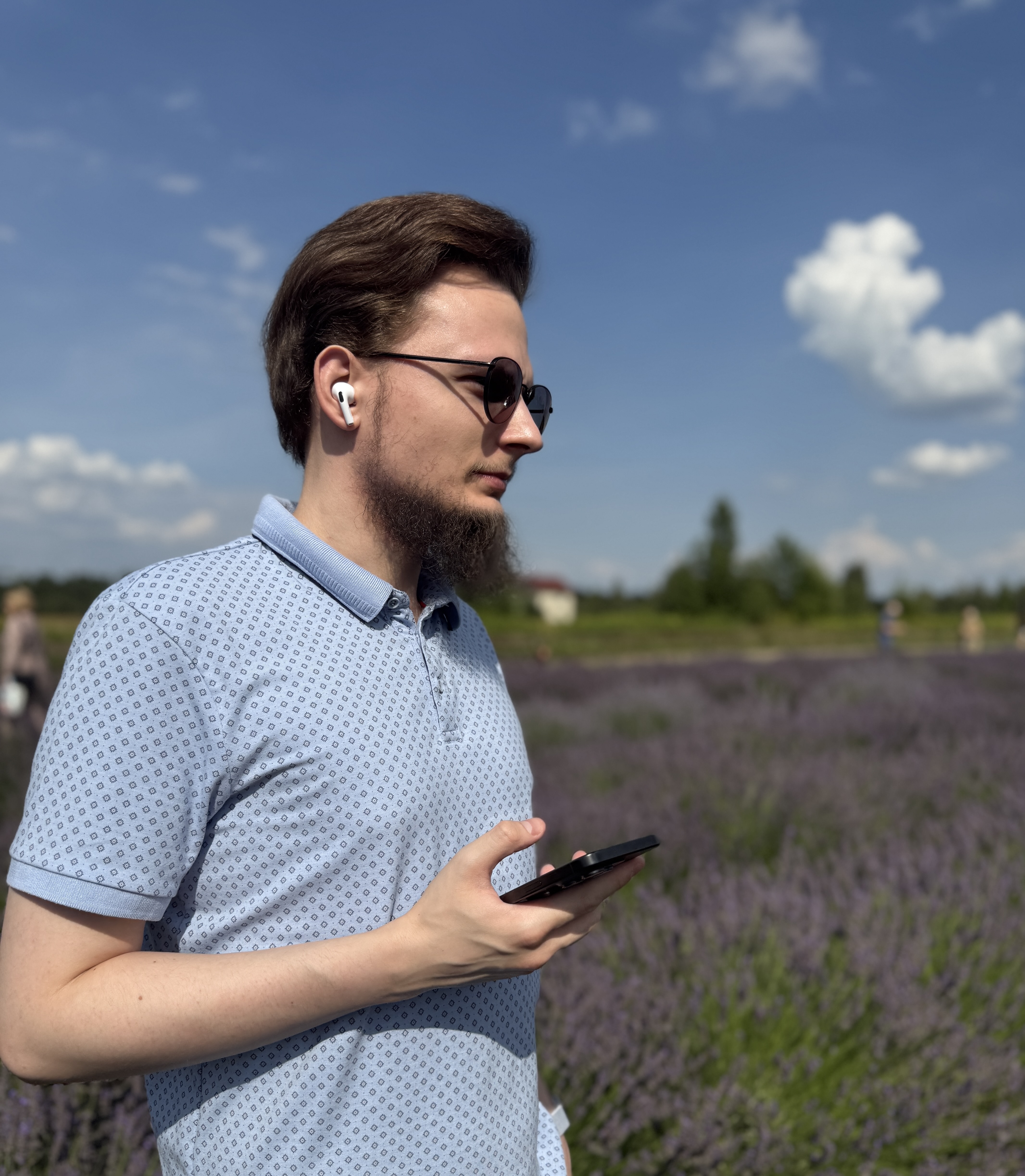
Welcome! I’m Dariusz Andrzej Wójcik, PhD, Research Fellow (Space Physicist) at the Space Research Centre of Polish Academy of Sciences (SRC PAS) in Warsaw, Poland. My work spans applied mathematics, stochastic processes, and space plasma physics.
Background
My academic path began in pure mathematics and quantitative finance. I hold a B.Sc. in Mathematics (Finances) and two M.Sc. degrees in Mathematics, one in Economics and one in Insurance & Finance. My early research covered mathematical modeling in Cybersecurity Insurance and Economics, and a Stability Analysis of the Generalized Lorenz System, all earned with Rector’s Scholarships.
I later completed my Ph.D. in Space Physics With Honors (Cum Laude) at the Space Research Centre, Polish Academy of Sciences, under supervision of Prof. Wiesław M. Macek, receiving a distinction for progress in doctoral work and publication achievements. My thesis Analysis of Markov Processes in Space Environment developed and validated a stochastic-dynamical framework for turbulence at kinetic scales using high-resolution data from the NASA Magnetospheric Multiscale (MMS) mission.
Research
My work integrates advanced mathematical frameworks, such as Markov processes, Fokker-Planck and Langevin dynamics, and multifractal analysis, with observational space data to investigate how energy is transferred and dissipated in magnetospheric and heliospheric plasmas, using R, Python, and MATLAB.
Key directions of my research:
- Testing universality of the Markovian turbulence cascade across the Earth’s magnetosphere using MMS multi-region data;
- Extending the Fokker-Planck / jump-diffusion framework to inner heliosphere measurements from NASA Parker Solar Probe, THEMIS, and ESA Cluster, BepiColombo missions;
- Characterizing intermittency and scale-invariance breakdown at day-side reconnection jets using Partial Variance of Increments (PVI) and multifractal spectra;
- Investigating space plasma dynamics, turbulence, and magnetic reconnection in the Earth’s magnetosphere, with a focus on kinetic-scale energy dissipation mechanisms using high-resolution MMS data;
- Fractal and multifractal analysis of large-scale structure in the universe, including galaxy clustering in redshift catalogs;
My research findings have been published in The Astrophysical Journal, Journal of Geophysical Research, and Physical Review, among others. I regularly present at international conferences including European Geosciences Union and American Geophysical Union, and have given an invited talk at Cluster-Plasma Observatory (2025) workshop in Paris. Since September 2025 I’m a Research Fellow at SRC PAS, working on cosmic plasma analysis across the magnetosphere, heliosphere, and astrophysical environments. I’m also a member of EGU, AGU, and JpGU, and serve as a peer reviewer for Scientific Reports (Springer Nature).
MMS Turbulence Lab (under development)
I’m building a web-based analysis tool that lets researchers explore the MMS mission data in the browser. The app currently supports turbulence data slicing, visualization, and basic statistical analysis across magnetospheric regions, with more analysis options actively being added.
Note: The app is hosted on Streamlit Community Cloud and may enter a sleep state. If the page is inactive, click “Yes, get this app back up!” to wake it — it will load within a minute.
Methods and tools
Fokker-Planck equation · Kramers-Moyal coefficients · Markov processes · Stochastic differential equations · Jump-diffusion models · Multifractal analysis · PVI & intermittency · Structure functions · Kappa distributions · R · Python · MATLAB · IDL / SPEDAS · Streamlit · MMS mission data · Parker Solar Probe · BepiColombo · Cluster / THEMIS
Beyond research
On this website, you’ll find a portfolio of my projects, articles, conference materials, and lectures. Hopefully in the near future I’ll also add a blog discussing the latest trends in statistics, AI, machine learning, and cybersecurity.
When I’m not immersed in science, I enjoy reading psychology books, playing strategy games, playing snooker, and spending quality time with my family.
I invite you to explore my work - and if you’re interested in collaborating or have a project in mind, feel free to reach out, using the links. Whether you’re a researcher, PhD cancdidate, student, or industry professional in need of rigorous quantitative solutions, I’m always open to connecting and exploring new opportunities!